
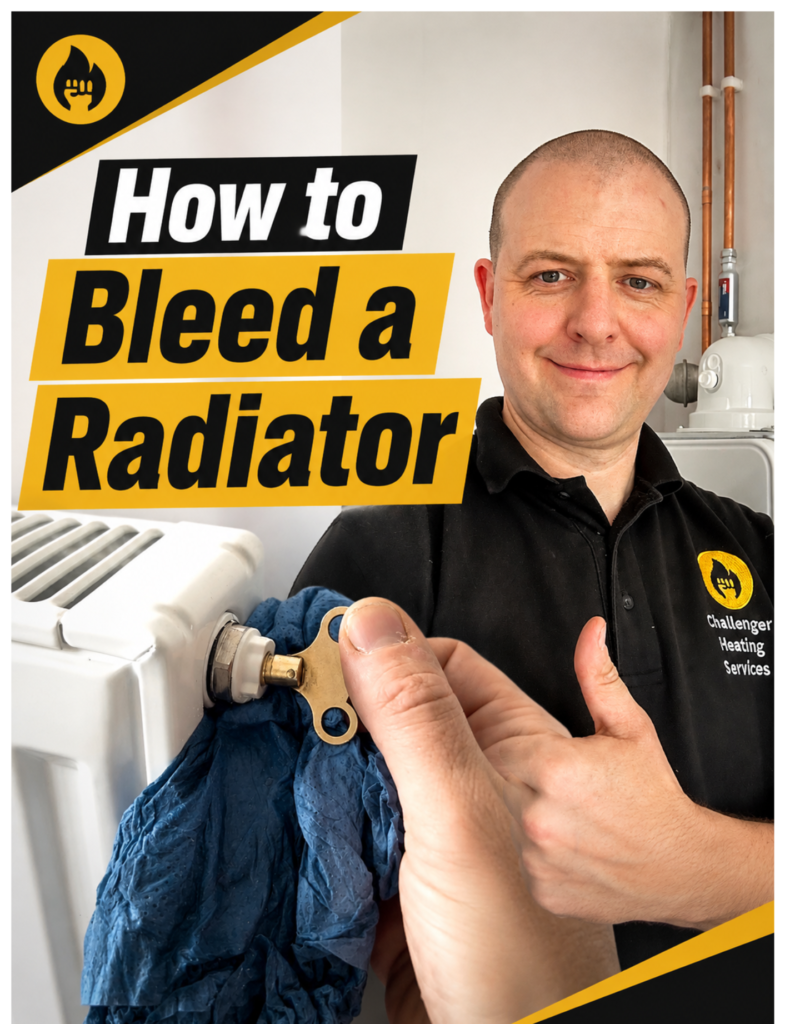
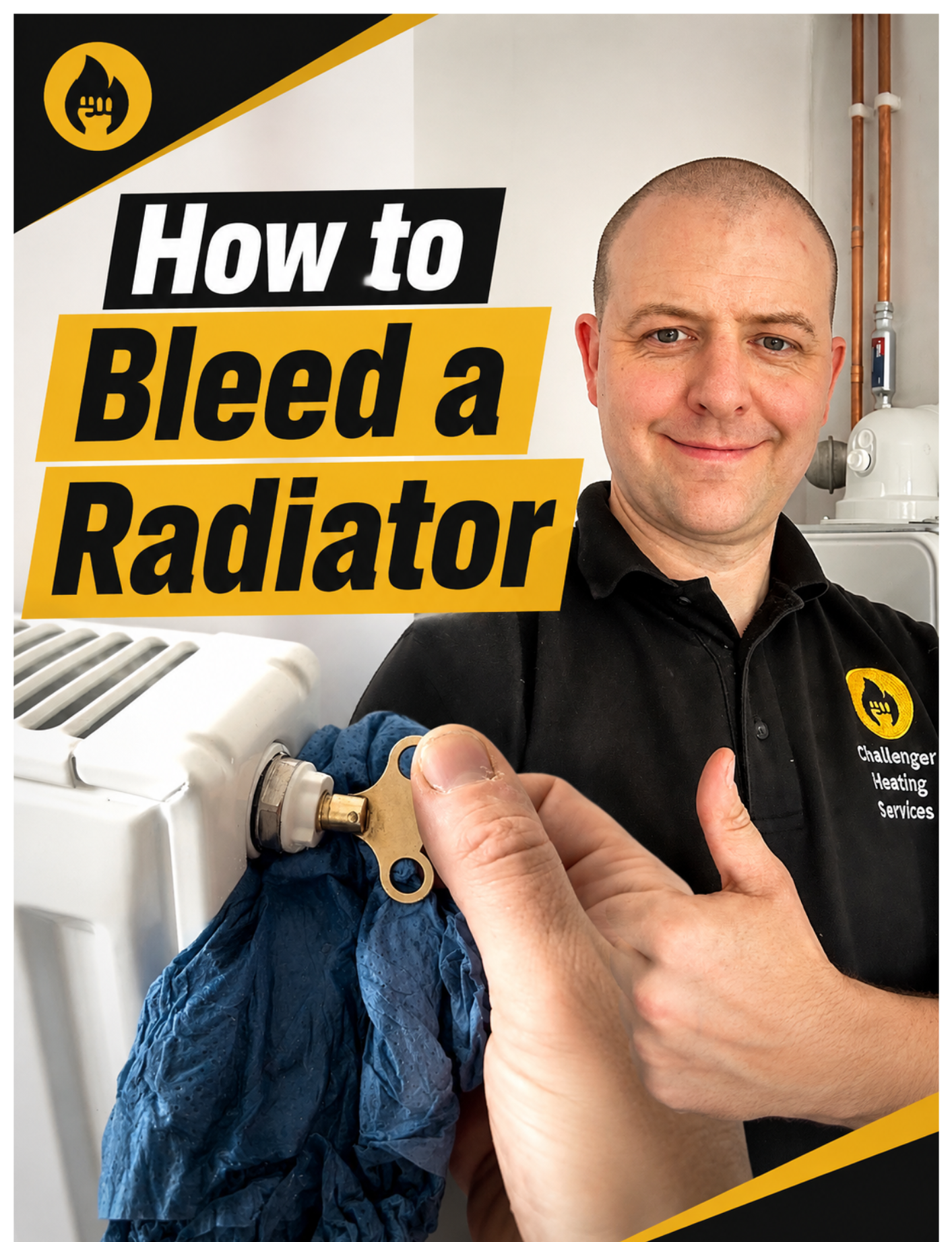
If your radiator is cold at the top but hot at the bottom, trapped air is usually the cause. Bleeding the radiator lets this trapped air escape so hot water can move through the whole radiator.
This guide explains how to bleed a radiator safely, why radiators need bleeding, and when the problem may need a heating engineer. It also explains what to check if air keeps coming back into your heating system.
What does bleeding a radiator mean?
Bleeding a radiator means opening the small bleed valve at the top of the radiator to release trapped air. You will usually hear a hissing sound as the air escapes.
Once water starts to come out, the trapped air has gone and the valve should be closed. The radiator should then heat more evenly once the heating is turned back on.
How do I know if a radiator needs bleeding?
A radiator may need bleeding if it is cold at the top but hot at the bottom. It may also need bleeding if it makes gurgling noises or heats unevenly.
You may also need to bleed radiators after a new boiler, new radiator or heating repair. This is because air can enter the system when it has been drained and refilled.
You do not need to bleed every radiator if they are all heating properly. Only bleed radiators that show clear signs of trapped air.
Why is my radiator cold at the top?
A radiator that is cold at the top and hot at the bottom usually has trapped air inside it. Hot water enters the radiator, but the air stops the water from filling the whole radiator.
This leaves the top section cold while the lower part heats up. Bleeding the radiator should normally fix this problem.
Why is my radiator cold at the bottom?
A radiator that is hot at the top but cold at the bottom is usually not an air problem. It is more likely to be caused by sludge, debris or poor water flow inside the radiator.
Bleeding the radiator will not usually solve this issue. The heating system may need cleaning, flushing or balancing by a heating engineer.
Why do radiators need bleeding after a new boiler or radiator is fitted?
It is common for radiators to need bleeding after a new boiler, radiator or heating part has been fitted. When a heating system is drained and refilled, air can get trapped inside the pipes and radiators.
Even if the system was bled during installation, small pockets of air can move around once the heating starts running. This air often collects at the top of radiators over the next few days.
Bleeding the affected radiators once or twice after the work is usually normal. Needing to bleed radiators every few days or every week is not normal.
Why does air keep coming back into my radiators?
If air keeps coming back into your radiators, there may be a problem inside the heating system. Repeatedly bleeding the radiators may help for a short time, but it will not fix the cause.
Common causes include a small leak, falling boiler pressure, repeated topping up, faulty seals, faulty automatic air vents, corrosion or poor pipework design. Older open-vented systems can also draw in air or pump water into the loft tank.
If the issue keeps returning, the system should be checked by a qualified heating engineer. It is better to find the cause than keep bleeding the same radiators again and again.
Can gas inside a radiator be dangerous?
The gas inside a radiator is not always normal air. Sometimes hydrogen gas can form because of corrosion inside the heating system.
This can happen when metal parts react with oxygen in the water. Over time, this can create black sludge, poor circulation and gas inside radiators.
Never try to test gas from a radiator with a flame. Hydrogen can be flammable, so repeated gas inside radiators should be checked by a qualified heating engineer.
What tools do I need to bleed a radiator?
You will usually need a radiator bleed key, a clean cloth or towel, a small bowl or container, and a cloth to protect the floor. Most radiators have a small square bleed valve that needs a radiator key.
Some modern radiators have a slotted bleed screw that can be opened with a flat-bladed screwdriver. Avoid using pliers because they can damage the bleed valve and make it harder to use in future.
How do you bleed a radiator safely?
Follow these steps to bleed a radiator safely. Take your time, because heating water can be hot, dirty and able to stain carpets, walls and flooring.
1. Find the radiator with trapped air
Turn the heating on briefly and check which radiators are not heating properly. A radiator that is cold at the top but warm or hot at the bottom probably needs bleeding.
Take care when touching radiators because they may become hot. Once you have found the affected radiator, turn the heating off before opening the bleed valve.
2. Turn the heating off
Turn the heating off before you open any bleed valves. Let the radiators cool down so you are not dealing with hot water.
Do not bleed a radiator while the heating pump is running. This can move air around the system and hot water may escape from the valve.
3. Protect the wall and floor
Place a towel or cloth under the bleed valve. Hold another cloth around the valve and place a small container underneath it.
Heating water can be dirty and may leave stains. Protecting the wall and floor before you start can help avoid damage.
4. Open the bleed valve slowly
Put the radiator key onto the bleed valve at the top of the radiator. Turn it about a quarter turn anticlockwise.
You should hear a hissing sound as the trapped air escapes. Do not open the valve too far, because the bleed screw can come out fully and may be hard to refit while water is escaping.
5. Close the valve when water appears
Once the air has escaped, the hissing sound will stop. When a steady trickle of water appears, turn the key clockwise to close the valve.
Close the valve gently. It only needs to be tight enough to stop water escaping, so do not overtighten it.
6. Check for leaks
Dry the area around the bleed valve after closing it. Check that water is not still dripping from the valve.
If the valve keeps dripping, it may be damaged or worn. A heating engineer may need to repair or replace it.
7. Repeat on other affected radiators
Bleed any other radiators that are cold at the top. There is no need to bleed radiators that are already heating evenly.
Once you have finished, check the boiler pressure if you have a sealed heating system. Low pressure can stop the boiler from working correctly.
Do I need to check the boiler pressure after bleeding radiators?
Yes, if you have a combi boiler or another sealed heating system. Bleeding radiators releases air and a small amount of pressure from the system.
Once you have finished bleeding the radiators, check the boiler pressure gauge. Many domestic boilers sit around 1 to 1.5 bar when cold, but you should always check your boiler manual.
If the pressure is too low, the system may need topping up. Do not overfill the system, and contact a heating engineer if you are not sure how to repressurise your boiler safely.
What if I have an open-vented heating system?
Older open-vented heating systems usually have a small feed-and-expansion tank in the loft. When you bleed a radiator, the tank may refill the system automatically.
You may hear the float valve operating for a short time. This should stop once the correct water level is restored.
If the tank keeps filling, overflows, fails to refill or makes unusual noises, contact a heating engineer. These signs can point to a fault with the tank, pipework or system design.
How often should radiators need bleeding?
Radiators should only need bleeding when there is a clear sign of trapped air. It is normal to bleed a radiator now and again, especially after heating work has been carried out.
Towel radiators may need bleeding more often because they are often fitted higher up in the heating system. This makes them more likely to collect trapped air.
You should not need to bleed radiators every few days or every week. If that happens, there may be a leak, pressure issue, corrosion problem or design fault.
Why is central heating inhibitor important?
Central heating inhibitor is a protective chemical added to the water inside your heating system. It helps reduce corrosion, sludge, limescale and damage to boilers, pumps, valves and radiators.
If your system has been drained, leaked or topped up many times, the inhibitor may become diluted. This can increase the risk of corrosion and gas forming inside radiators.
Adding inhibitor can help protect the system, but it will not fix a leak or ongoing fault. The cause of repeated air or falling pressure should still be investigated.
When should you call a heating engineer?
You should contact a qualified heating engineer if your radiators need bleeding every few days or every week. You should also call an engineer if your boiler pressure keeps dropping, water is leaking, or the radiator stays cold after bleeding.
Other warning signs include black water from the radiator, several radiators cold at the bottom, constant gurgling noises, a dripping bleed valve, or water pumping into the loft tank. These problems usually need more than basic radiator bleeding.
A heating engineer can check whether the issue is caused by trapped air, sludge, poor circulation, a leak or another system fault. Fixing the cause is better than repeatedly bleeding the same radiator.
Can Challenger Heating help with radiator problems?
Yes, Challenger Heating Services can help if your radiators are not heating properly or your boiler pressure keeps dropping. We can also investigate why you keep needing to bleed your heating system.
We help homeowners with boiler servicing, heating repairs, radiator issues and central heating maintenance across Sutton Coldfield, Lichfield, Tamworth, Walsall, Birmingham and Solihull. If the problem keeps coming back, we can check the system and explain what needs to happen next.
Final thoughts
Bleeding a radiator is often a simple way to fix a radiator that is cold at the top. Turn the heating off, open the bleed valve slowly, let the air escape, close the valve when water appears, then check the boiler pressure afterwards.
If the radiator stays cold, the boiler pressure keeps dropping or air keeps returning, there may be a bigger issue inside the heating system. In that case, a qualified heating engineer should check the system and fix the underlying problem.