By Simon Stokes, Challenger Heating Services
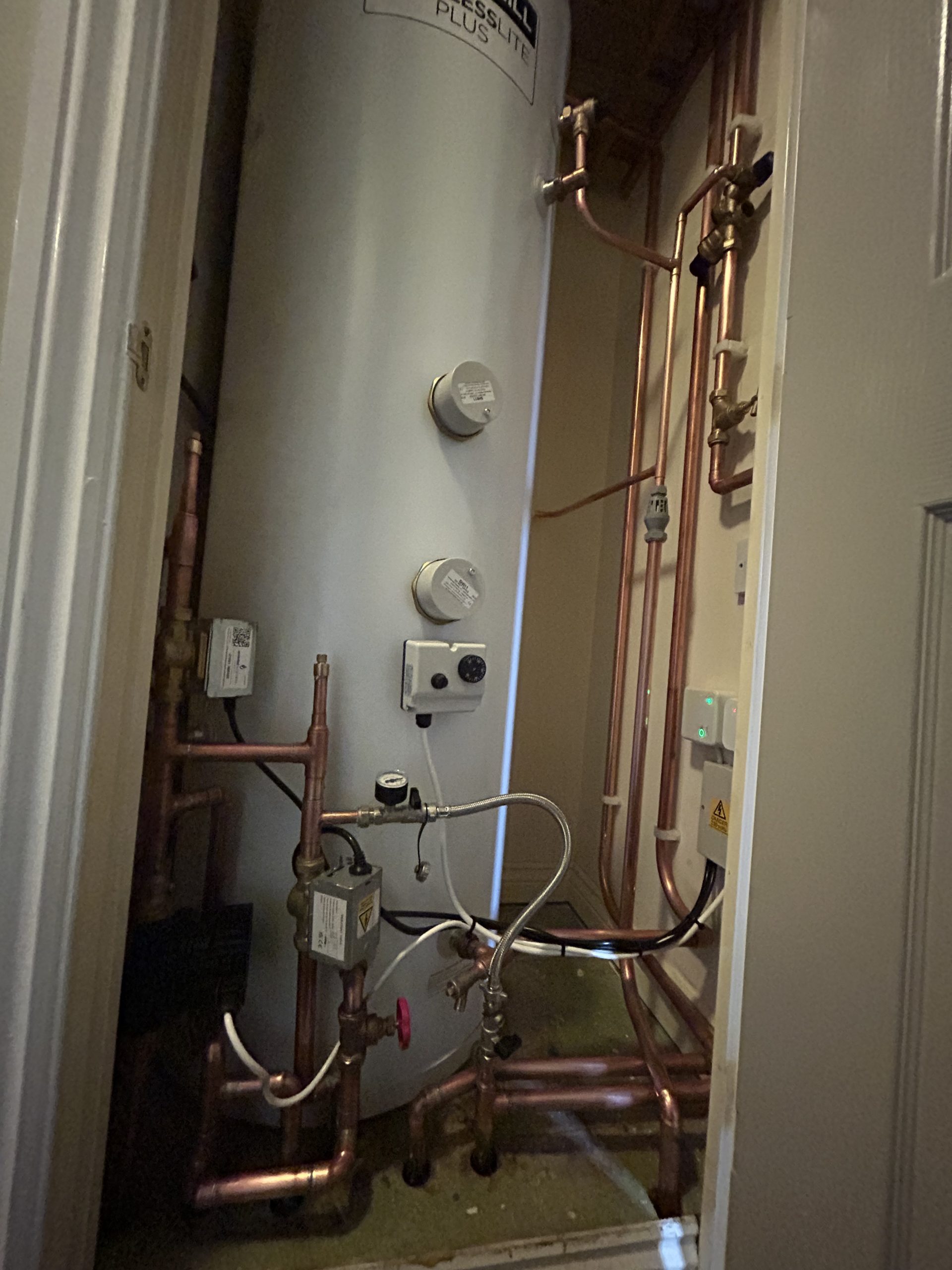
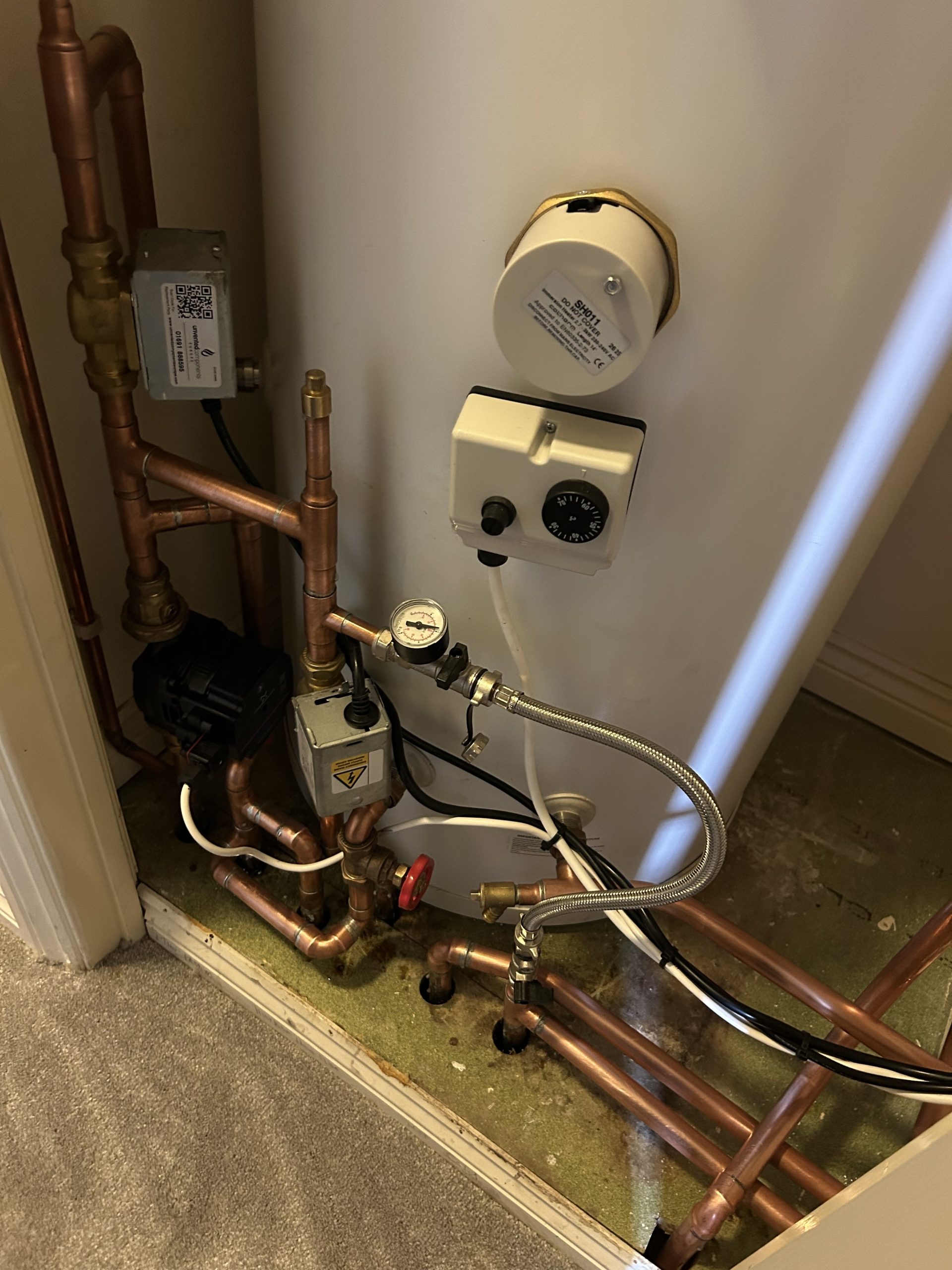
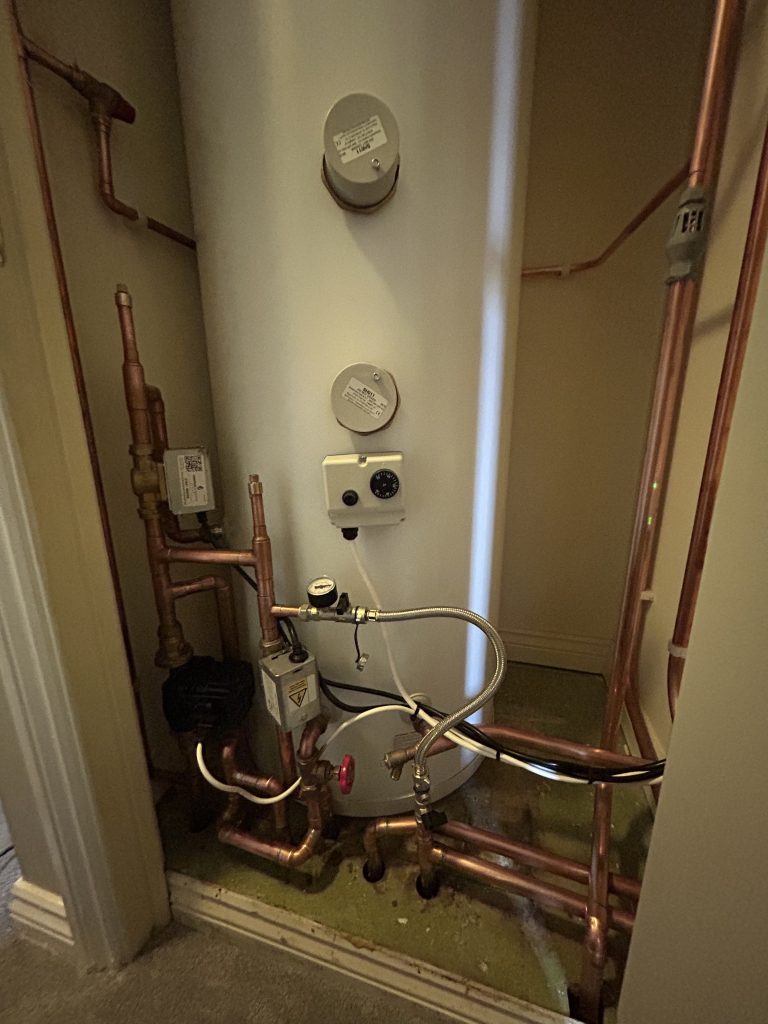
An unvented hot water cylinder is a sophisticated tank designed to store and supply hot water at mains pressure throughout your home. It differs from traditional systems as it doesn’t rely on a cold-water tank in the loft. Instead, it draws water directly from the mains, eliminating the need for a header tank and ensuring robust water pressure for taps and showers.
How Does it Work?
The cylinder receives cold water from the mains, which is then heated inside either by electric immersion heaters (in direct cylinders) or by a boiler or external heat source (in indirect cylinders). Twin-coil models can even utilize two heat sources, like boilers and solar panels. The system’s sealed design prevents contamination risks and allows for installation flexibility.
Types of Unvented Cylinders
1. Direct Unvented Cylinders – Pros: Easy installation, low maintenance, ideal for electric-only homes. – Cons: Higher running costs, slower heat recovery times.
2. Indirect Unvented Cylinders – Pros: Quick heat recovery, compatible with existing boilers, cost-effective. – Cons: Installation complexity, reliant on boiler performance.
3. Twin-Coil Cylinders – Pros: Utilizes solar energy, environmentally friendly. – Cons: Higher initial cost, most suitable for homes with existing solar systems.
Sizing the Cylinder Correctly
Choosing the right size is key to comfort and efficiency. Under-sizing can lead to hot water shortages, while over-sizing results in wasted energy.
Where Can It Be Installed?
Unvented cylinders, free from gravity-based constraints, can be installed virtually anywhere — from airing cupboards to basements.
Advantages and Disadvantages
Advantages:- Delivers high mains pressure- No need for cold-water tanks- Cleaner, fresher water supply- Flexible installation locations- Energy-efficient operation
Disadvantages:- Higher installation costs- Requires annual expert maintenance- Depends on good mainline pressure
Maintenance and Safety Considerations
Proper installation and annual maintenance by G3-certified engineers are mandatory for safety and compliance.
Ideal Candidates for Unvented Cylinders
Best for homes with several bathrooms, limited loft space, or existing solar integration. An excellent upgrade for those using traditional systems.
Should You Go for an Unvented Cylinder?
For homes seeking high-quality water pressure, reliable multi-bathroom performance, and long-term energy efficiency, an unvented cylinder is the right choice despite higher initial costs and maintenance requirements.